In the streets of the capital of Baden-Württemberg, german dominates, but french, english, italian, danish, and dutch are also spoken. In the late afternoon, this whole crowd heads towards Cannstatt (a district of Stuttgart) and its "Wasen," the large fairground set up on the banks of the Neckar River.
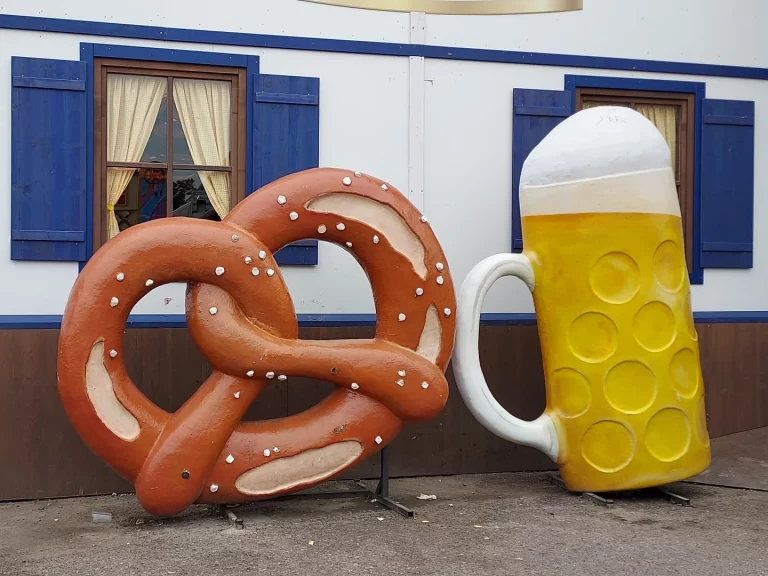
Welcome to the "Cannstatter Volksfest", Stuttgart's big folk festival. Three weeks of beer, music, rides and food. A sort of little sister to Munich's Oktoberfest… although the Swabians would certainly prefer to say that it has its own unique character!
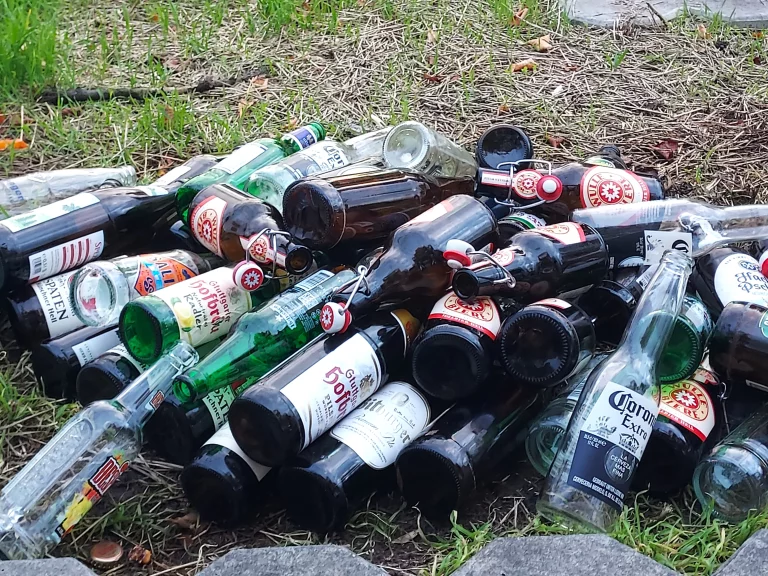
The event, founded in 1818, is so popular that access to the site can be temporarily prohibited, particularly on weekends and on October 3rd, German Unity Day. Some visitors bring drinks to tide them over, while the deposit bottles left behind are a welcome find for those who collect them: in Germany, they represent a small amount of money. The scene, however, remains rather disheartening.
First : gain some altitude
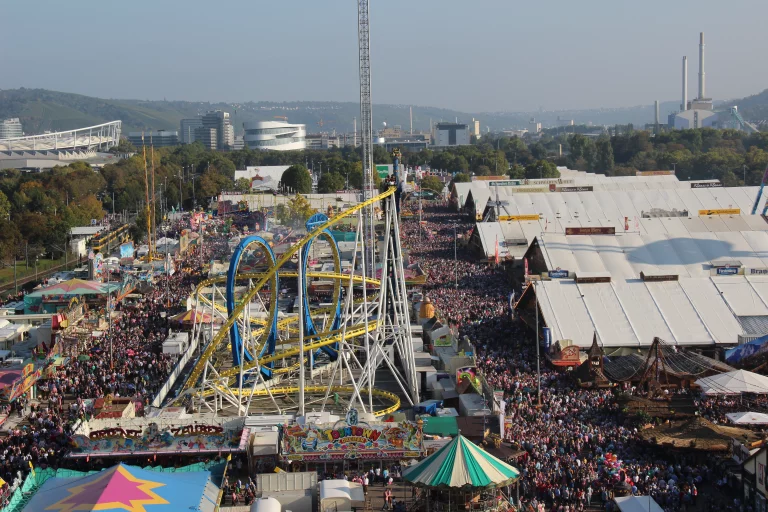
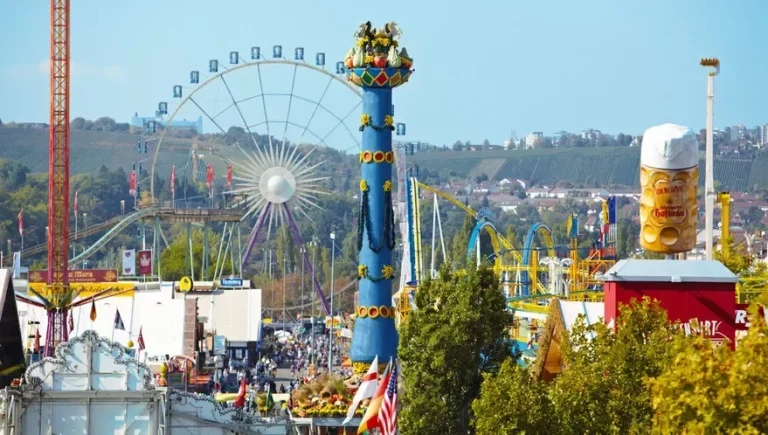
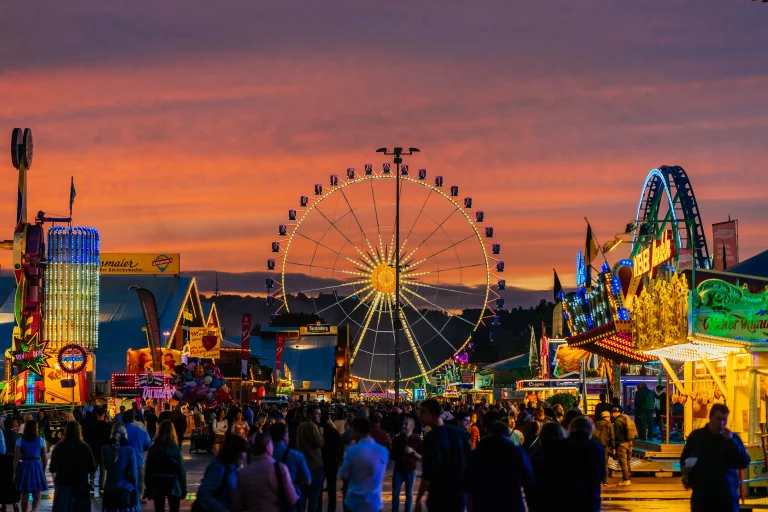
Before plunging into the crowds, a ride on the Ferris wheel is a must. From up there, the view is superb: the Neckar River, the fairgrounds, the attractions, the multicolored crowds, and, a little further on, the Mercedes Museum.
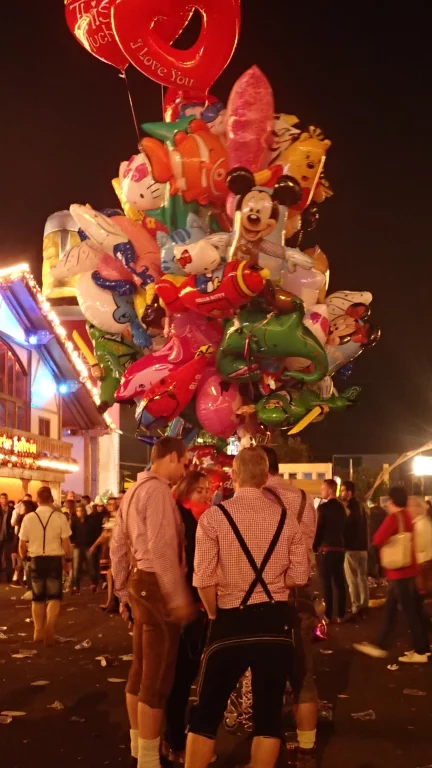
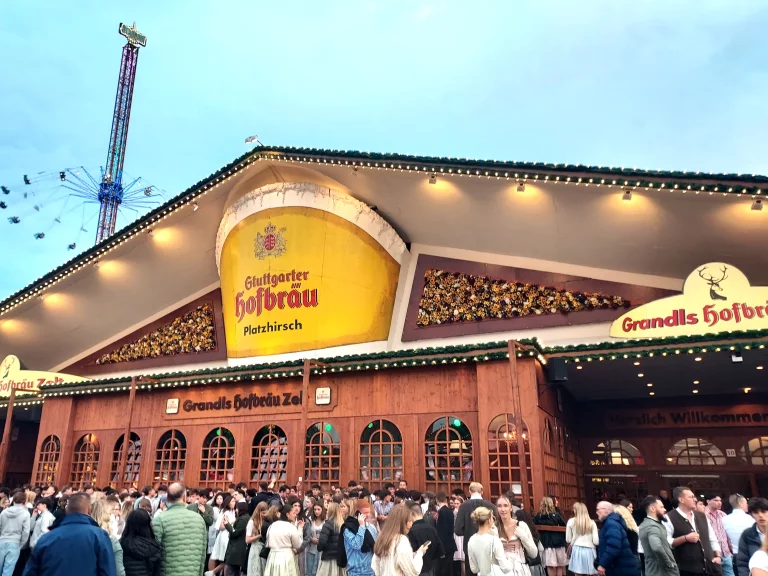
In the afternoon, the Wasen takes on the air of a large, peaceful family festival. Children run around, families stroll, and generations mingle. In the evening, however, the atmosphere changes. And then you understand why it's best to have reserved your place in the tents and to wear the wristband proving it.
Because to enter the brewers' main tents, the precious wristband is essential, and places are generally reserved well in advance. Each reservation also corresponds to a specific time slot: 11 a.m. to 5 p.m. or 5 p.m. to 11 p.m.
When it's time for the shift change, it's best not to be allergic to crowds, or better yet,avoid the back exits. Partygoers exit through the back doors, forcing their way through the throng strolling through the aisles. Some still have beer in hand, and a few drops of something might just be the perfect accompaniment to this exit.
One Maß and the party begins
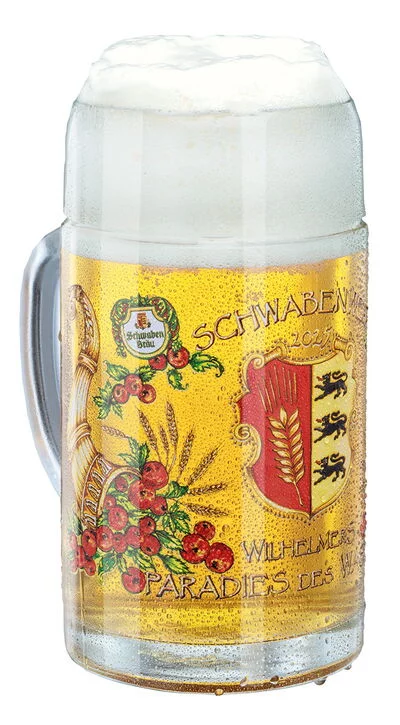
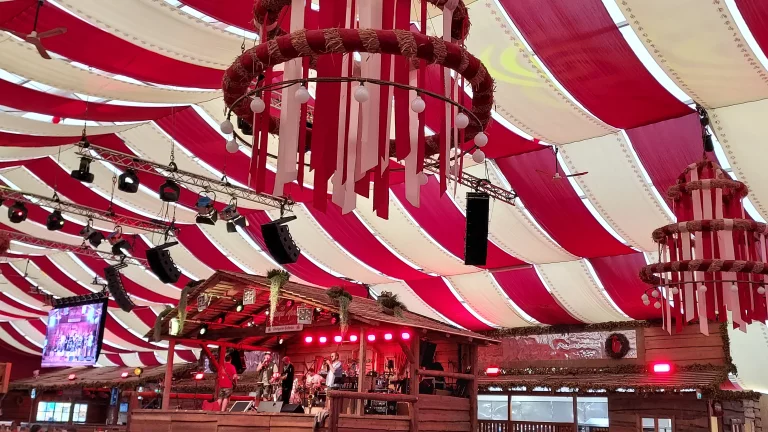
Inside, it doesn't take long to grasp the concept. Waiters and waitresses automatically bring "Maß," steins containing a liter of beer. And once the first stein is placed on the table, the atmosphere quickly heats up.
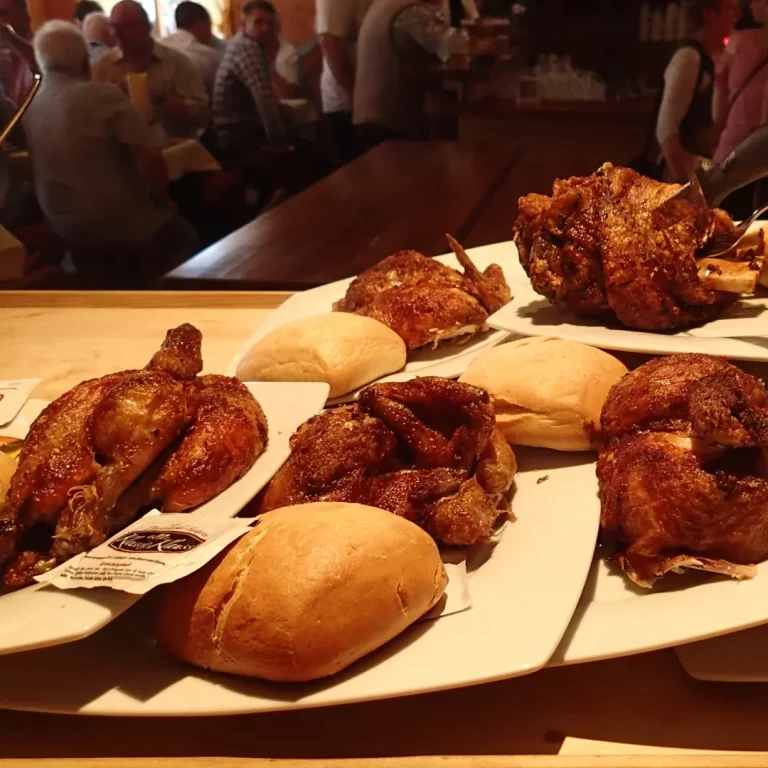
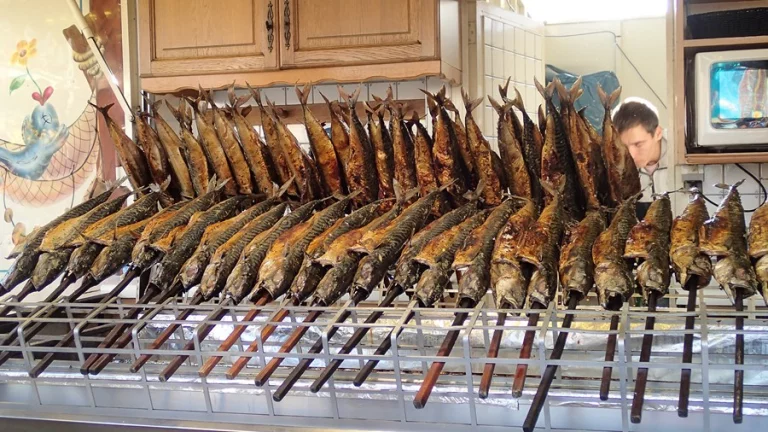
To survive this liquid diet, one good piece of advice: eat. "Göckele," this well-spiced roast chicken, is a classic. And it seems the seasoning has been carefully considered: it makes you thirsty!
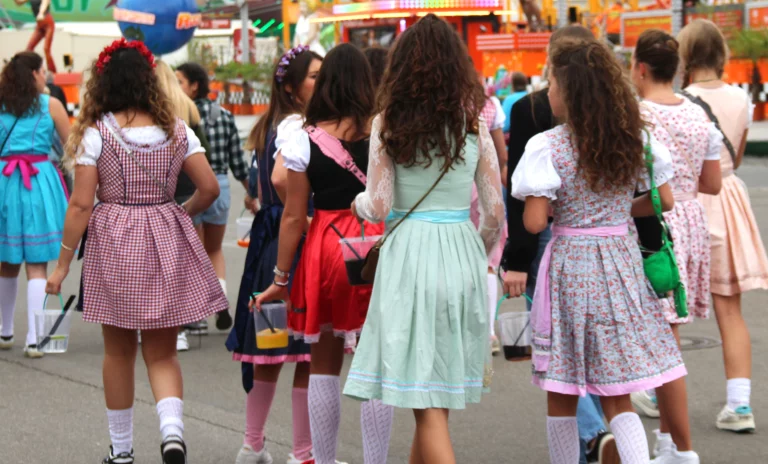
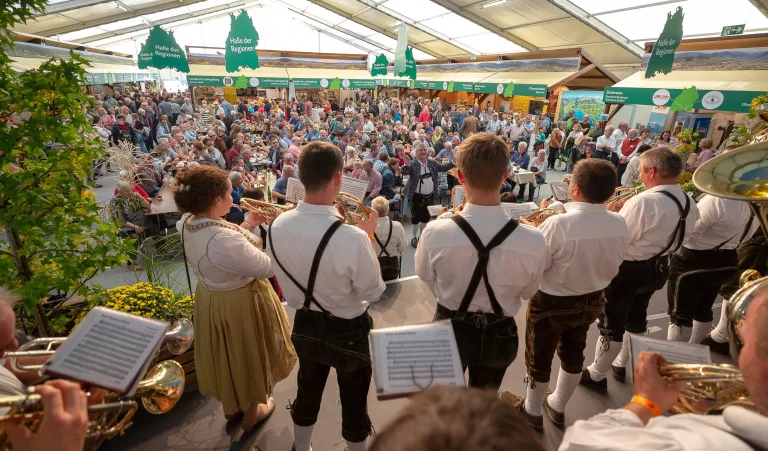
In the vast open space, it's best not to linger over your plate. The first diners are already on their feet on the benches. The bands play hit after hit, hands clap in time, voices rise, and everyone starts dancing. Once you're up, forget about sitting down quietly. You sing, you sway, you grab onto your neighbor, and you join in. Sneakers and walking shoes are therefore much more practical than dress shoes. Even with a dirndl or lederhosen!
And then there's a secret accessory: the plastic bag. Regulars have known this for a long time. You place it on the bench to avoid sitting directly on a surface that becomes increasingly sticky as the hours go by. And it also serves to protect a vest or a few personal belongings from splashes.
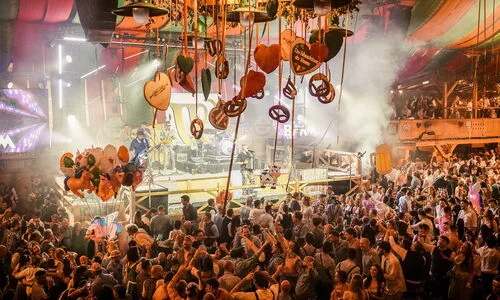
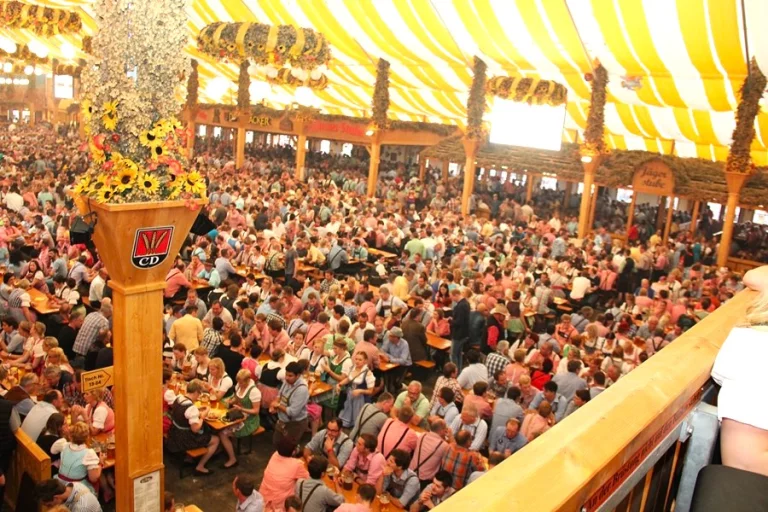
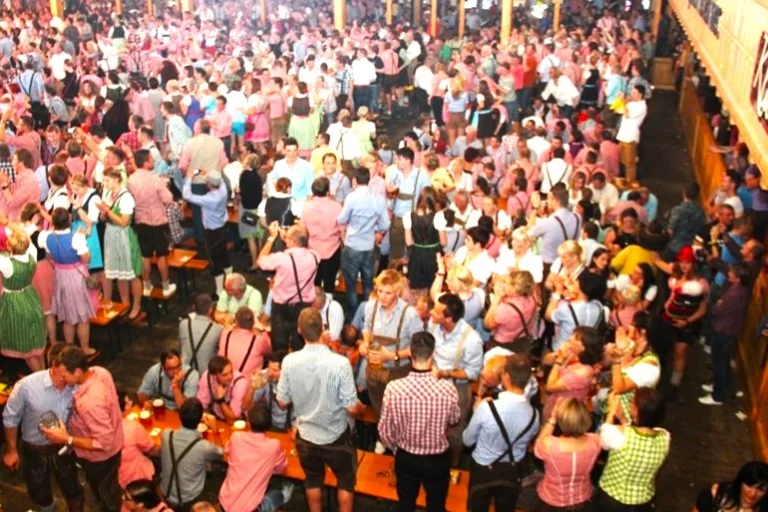
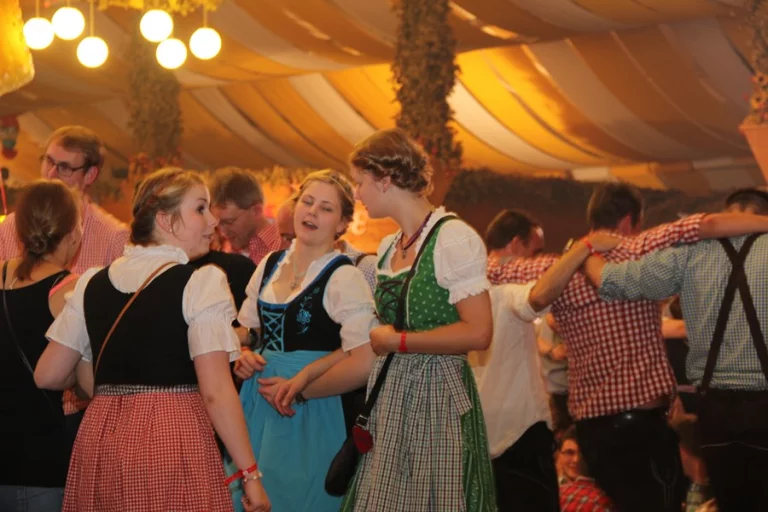
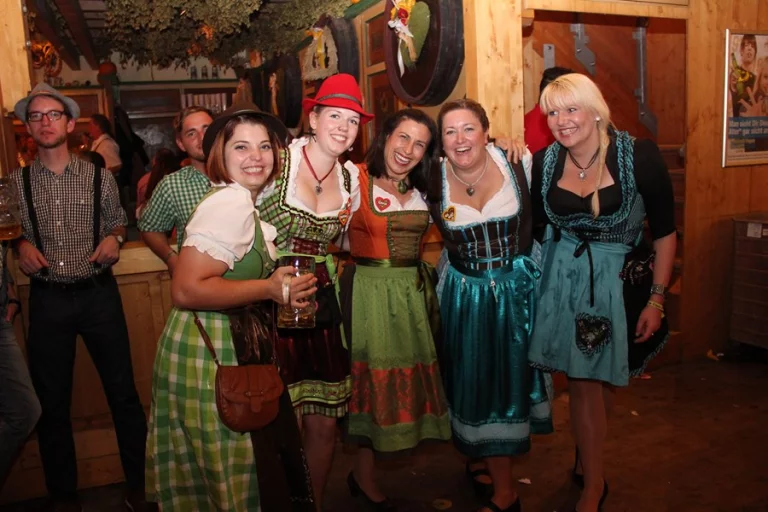
Because yes, the beer sometimes overflows.
Especially when the traditional "Ein Prosit, ein Prosit der Gemütlichkeit" rings out. At "Die Krüge hoch!", everyone raises their mug. And when dozens of glasses full of beer are being lifted at once, you sometimes have to accept losing a few drops on your clothes.
But having taken a few precautions, you just have to let yourself be swept away by the good cheer.
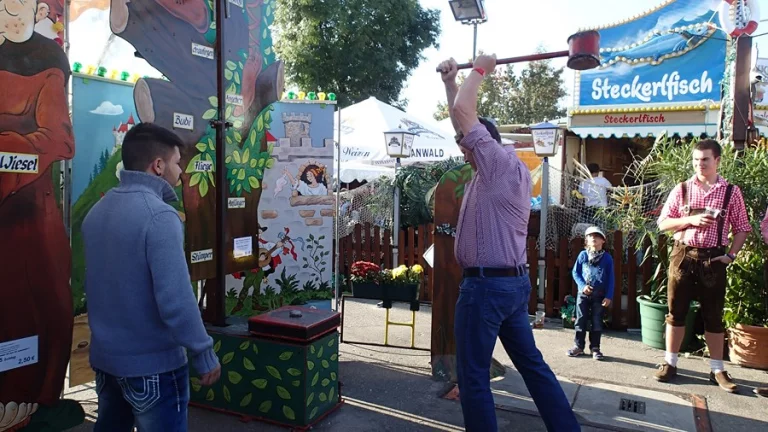
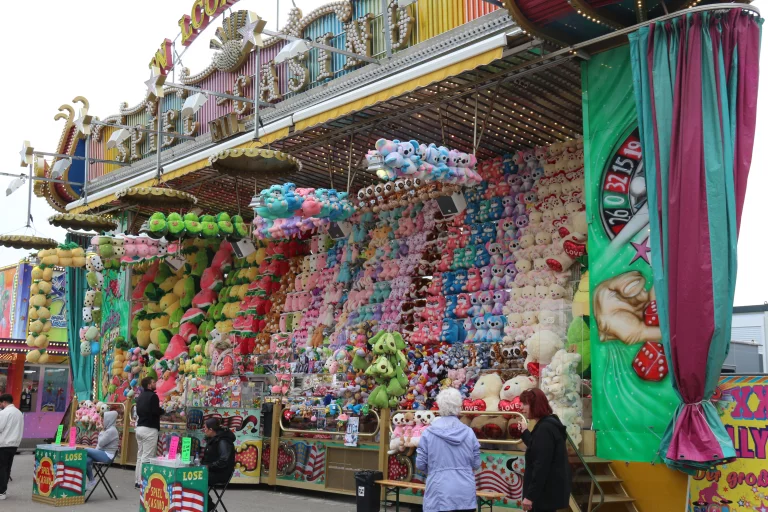
While the big tents are full of singing and drinking people, the rides outside are in full swing. Thrill-seekers are spoiled for choice, while more sedate visitors are happy to rediscover some of the more traditional attractions.
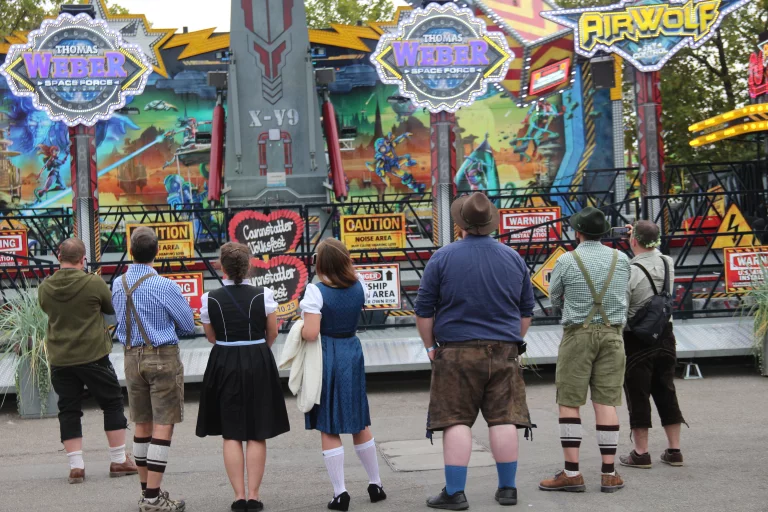
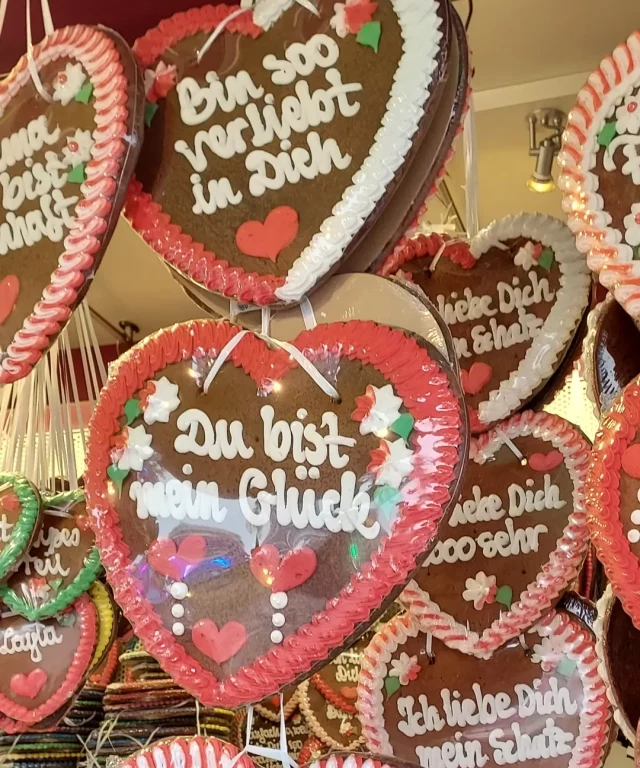
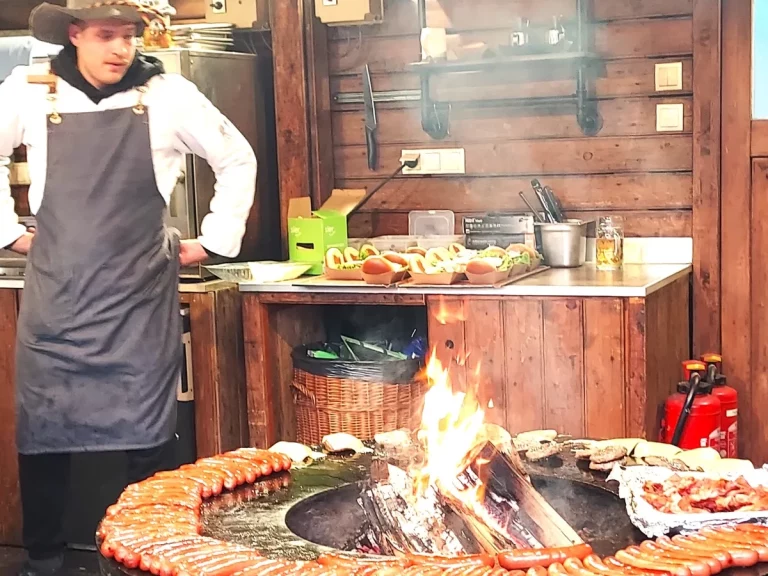
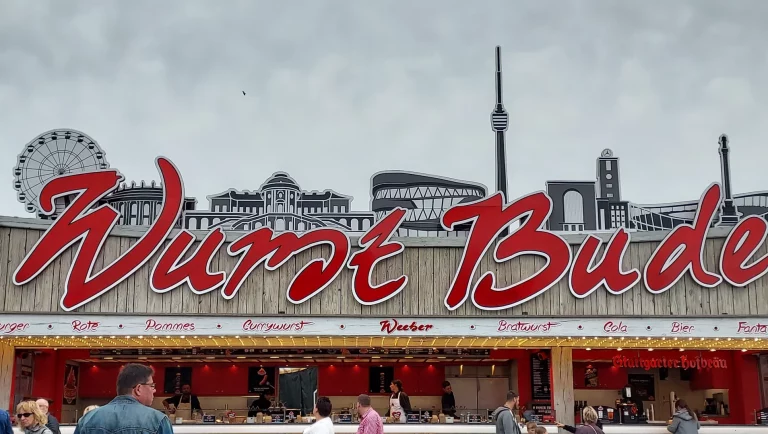
And it's impossible to leave without passing by the stalls selling gingerbread hearts covered in "I love you" and other passionate declarations, or without grabbing a bag of roasted almonds. As for those who didn't manage to snag a table under the tents, they're not doomed to starve: beer gardens and food trucks take over.
Before beer, there were harvests
What I particularly like about this festival is that it doesn't owe its existence to beer. The Cannstatter Volksfest was created on September 28, 1818, by King William I of Württemberg and his wife Catherine, in a far less festive context. After several poor harvests, notably in 1815 and 1816, the population suffered from famine and agricultural prices skyrocketed.
William I, who came to power in 1816, implemented various policies aimed at supporting the economy and agriculture. In 1818, he created a large agricultural festival to boost the morale of the population and to give thanks for the harvests.
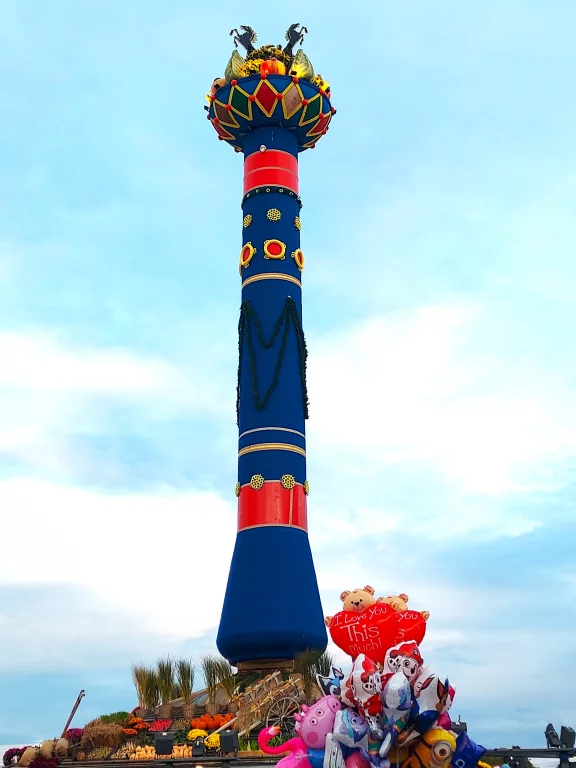
Two centuries later, beer has obviously taken up a lot of space, as have the rides. But one detail still recalls the origins of the event: the large column of fruit, which has become the emblem of the Cannstatter Wasen.
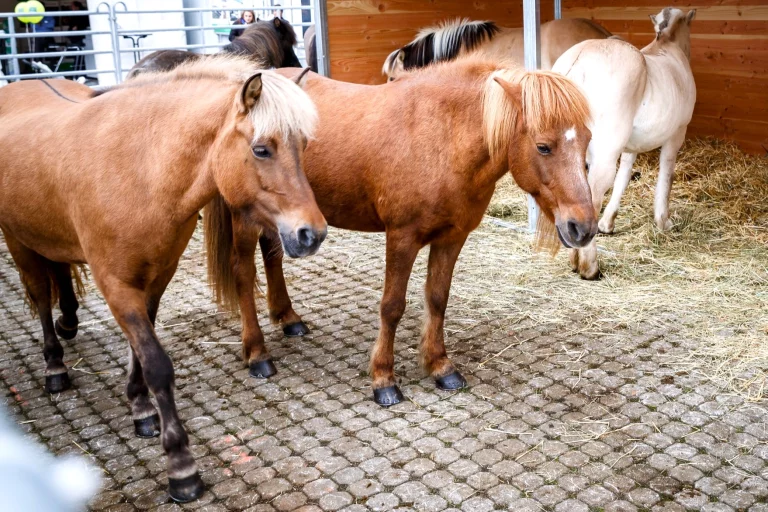
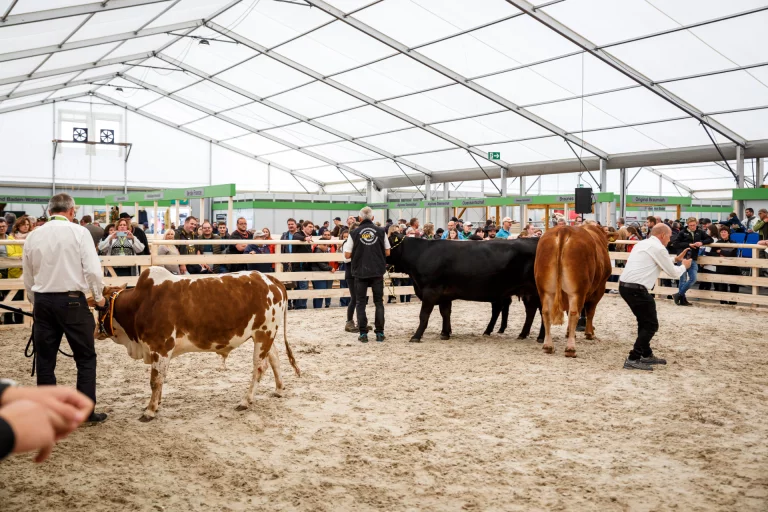
The agricultural festival of yesteryear has become the Cannstatter Volksfest. And every four years, the Landwirtschaftliches Hauptfest serves as a reminder of the agricultural roots of this gigantic popular event.
This year, from September 27 to October 4, the large agricultural festival returns to its location on the Wasen.
Practical information
Before putting on the dirndl…
The 179th Cannstatter Volksfest will take place from September 25 to October 11, 2026.
With around four million visitors from all over the world, Wasen is not exactly a small village fair!
My advice:
To leisurely sample the culinary specialties (there's more than just roast chicken), go around noon. The musicians are already playing, the atmosphere is calmer but still friendly. The afternoon is perfect for a quiet stroll for families and elder people.
Don't miss it:
the grand historical parade, sunday, september 27 at 11 a.m., with some 3,500 participants;
the eight tents, one of which is dedicated to wines, Stuttgart also being a wine-producing city;
the countless rides and attractions for all audiences
the inauguration, with the traditional beer keg that the mayor of Stuttgart has to pierce.
Opening hours: Monday to thursday 12pm-11pm; friday 12pm-12am; saturday 11am-12am; sunday 11am-11pm. On friday, september 25th, open from 3pm to midnight.
Please note: bags and backpacks larger than A4 size are not permitted on the premises. Children under 6 must leave the party before 8 pm; those under 14 must be accompanied by an adult after 8 pm, and those under 18 after 10 pm.
Budget-wise: expect to pay between €14.60 and over €15.40 for a one-liter Maß, depending on the tent. A half-Göckele with a roll costs between €14 and €15.80.
And if you love agriculture as much as beer, the Landwirtschaftliches Hauptfest (Agricultural Main Festival) takes place concurrently from September 27 to October 4. There is an admission fee. Tickets purchased in advance include free public transport on the day of your visit; (see https://www.lwh-stuttgart.de/tickets/ )
Stuttgart ou Munich ?
Difficile de parler du Wasen sans penser à l’Oktoberfest de Munich. Les deux fêtes ont leurs grandes chopes, leurs chapiteaux, leurs orchestres et leurs manèges. Mais l’ambiance n’est pas tout à fait la même.
Munich reste la reine incontestée en matière de fréquentation, avec quelque 6 à 7 millions de visiteurs. Très internationale, très connue, très bavaroise aussi, elle impressionne par ses immenses chapiteaux de brasseries.
Stuttgart joue une autre carte. Avec environ 4,6 millions de visiteurs, la Cannstatter Volksfest est souvent décrite comme plus souabe, plus familiale et un peu plus détendue. La fête foraine y occupe également une place particulièrement importante.
Alors, quelle est la meilleure ?
A Munich comme à Stuttgart, on peut venir pour goûter la bière, pour les manèges, pour l’ambiance ou simplement pour regarder passer les dirndl et les culottes de cuir.
Et, tôt ou tard, on finit généralement par lever sa chope avec les autres.
Die Krüge hoch !