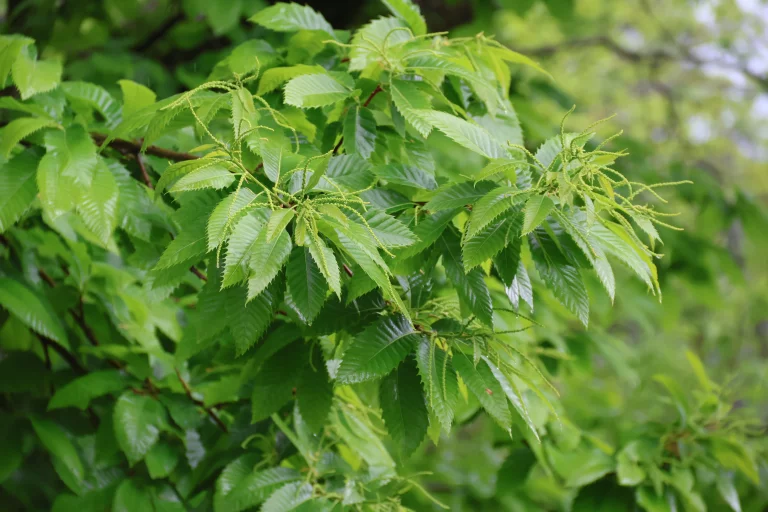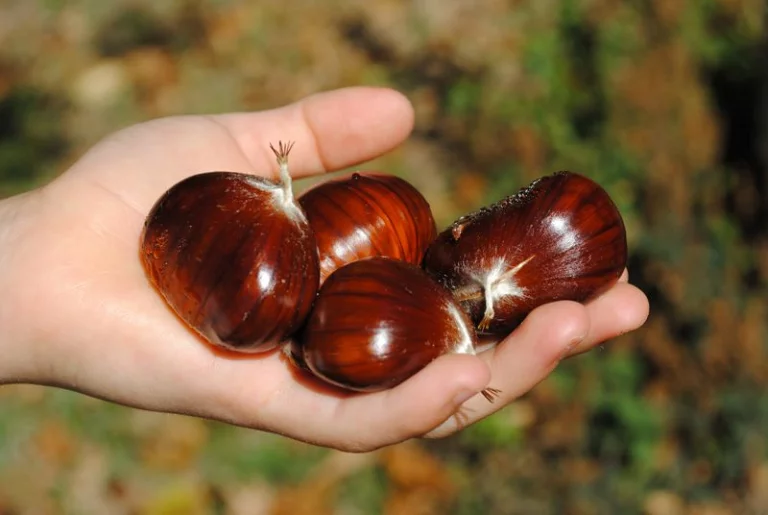
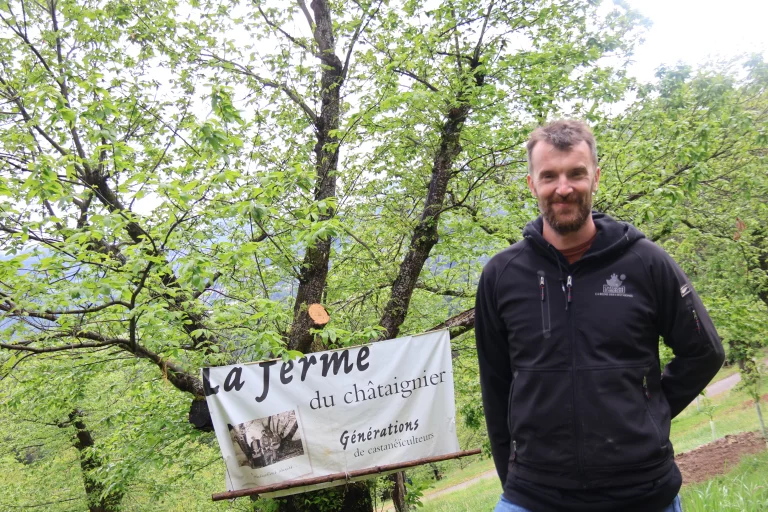
On his family farm, he maintains 36 hectares of chestnut groves. To diversify, the family also produces berries, honey, and some vegetables which are processed into soups. This diversification has become essential to ensure the farm's economic viability.
The chestnut tree has long been known as the "bread tree." From the 17th century to the early 20th century, its fruit formed the basis of the diet for many rural families. Chestnuts were then shipped by the ton from the Ardèche region to supply other parts of France.
The industry then went through difficult decades. Rural exodus, ink disease, and the intensive harvesting of wood to supply tannins to the Lyon silk industry halved the area of chestnut groves. Faced with this decline, producers mobilized. The Grange family participated in the creation of the Ardèche chestnut producers' association as early as 1949, a commitment that would later contribute to obtaining the Ardèche Chestnut Protected Designation of Origin (PDO).
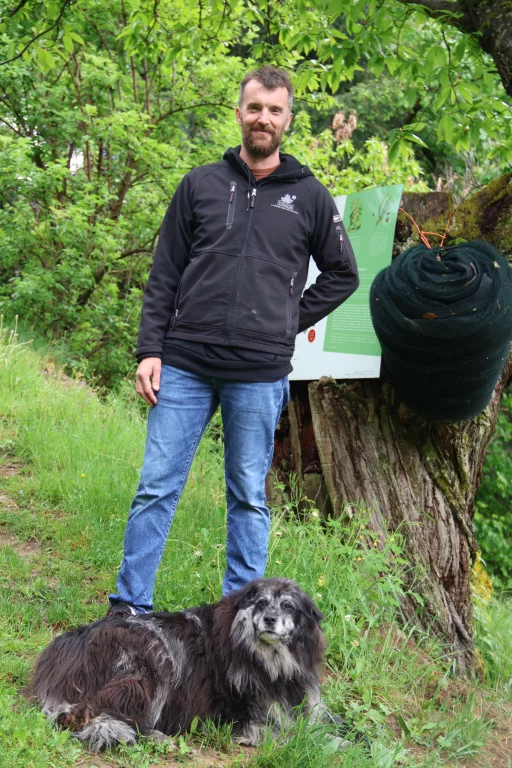
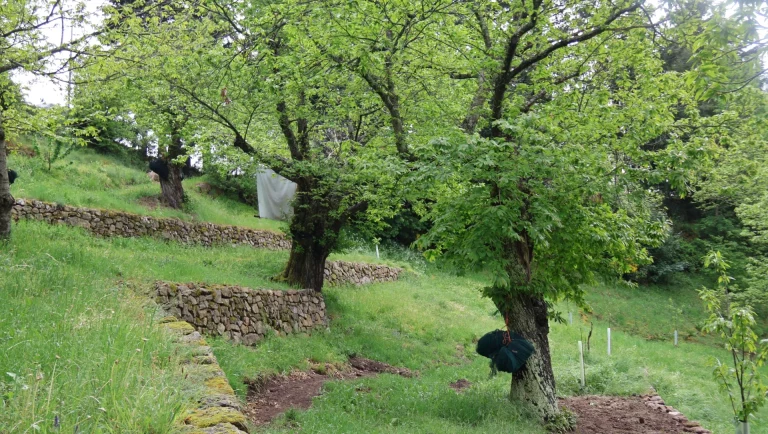
Even today, Aurélien continues this work of preservation. Proudly, he represents the seventh generation of chestnut growers. In his chestnut grove, winter is devoted to pruning and maintaining the trees. Every two years, he grafts new trees to renew the orchards. For the past ten years, he has favored varieties from the southern Ardèche region, which are better adapted to periods of drought.
There's no shortage of work. The terraces and their dry stone walls need maintenance, the orchards need tending, the harvests need processing, and the produce needs to be sold. About ten people work on the farm year-round, joined by seasonal workers during the harvest.
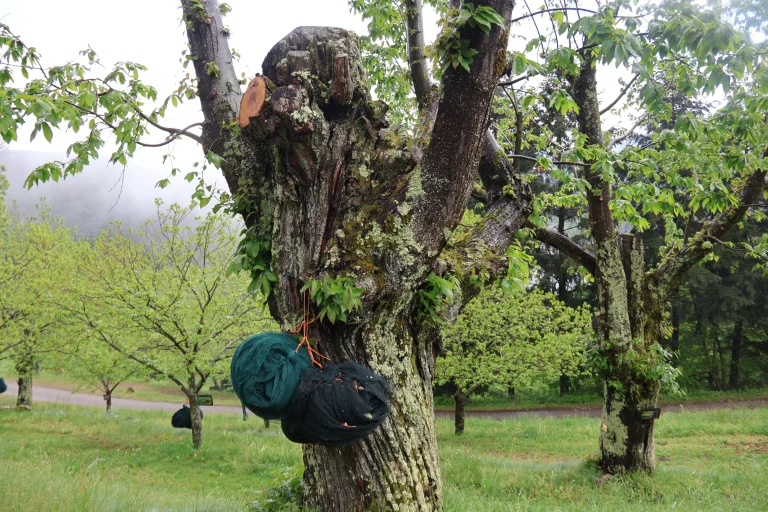
In the steepest areas, chestnuts are still harvested by hand. "We advance row by row, on our knees, wearing thick gloves!" Elsewhere, nets and mechanization make harvesting easier. "Without these developments, the crop would have struggled to survive," the producer believes.
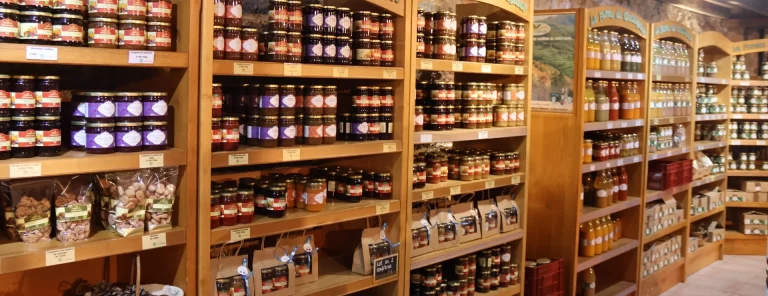
With nearly 85 tons harvested each year, the Chestnut Farm is one of the largest farms in the department. Only a few tons are sold fresh; the rest is processed on site. Chestnut cream, flour, biscuits, syrups, and liqueurs are all products used to make the most of the harvest.
In the farm shop, visitors discover all the facets of this fruit, often mistakenly called a "marron." True marrons are the fruit of the horse chestnut tree and are not edible. The chestnut, on the other hand, can be enjoyed in countless ways.
At the end of the visit, one thing becomes clear: in the Ardèche, the chestnut is much more than an agricultural product. It is a living heritage that families like Aurélien Grange's continue to keep alive, generation after generation.
Practical information
La Ferme du Châtaignier, 700 chemin du roux, 07270 Lamastre, tel 04 75 06 30 19; open in July-August from Monday to Saturday from 11am to 7pm, April to June and September to October Wednesday and Saturday from 3pm – 6pm.
Guided tours: 11am and 4pm in July-August, at 3pm in other opening months.
Free access to the interpretive trail, not very suitable for strollers and people with reduced mobility.
Sweet pancakes made with chestnut flour.
In summer: chestnut flour galettes (lunchtime).
Motorhome platform, e-bike charging station