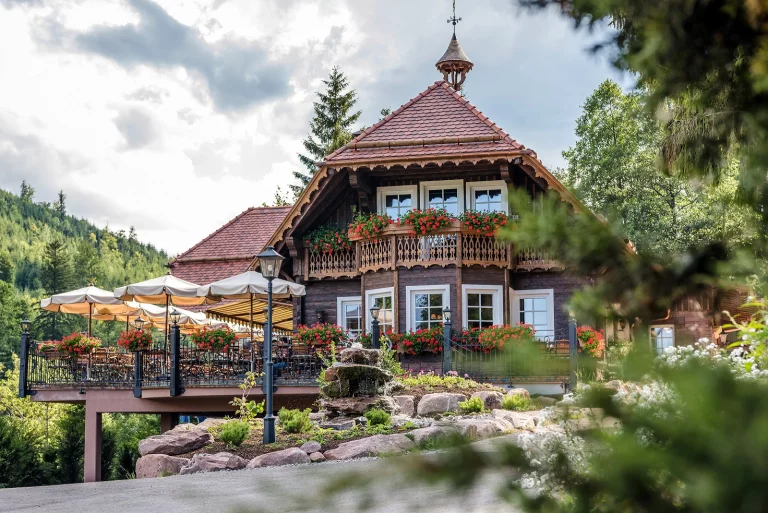
It all began in 1907 with the establishment of the Buhlbach fish farm in the upper Murg Valley. In 2016, the Bareiss family, owners of the renowned five-star hotel in Baiersbronn, acquired the fish farm along with the neighboring Fischerstüble, a hiking lodge. Their vision was to transform the site into a thriving project for the future: producing high-quality fish for local cuisine while preserving an exceptional environment.
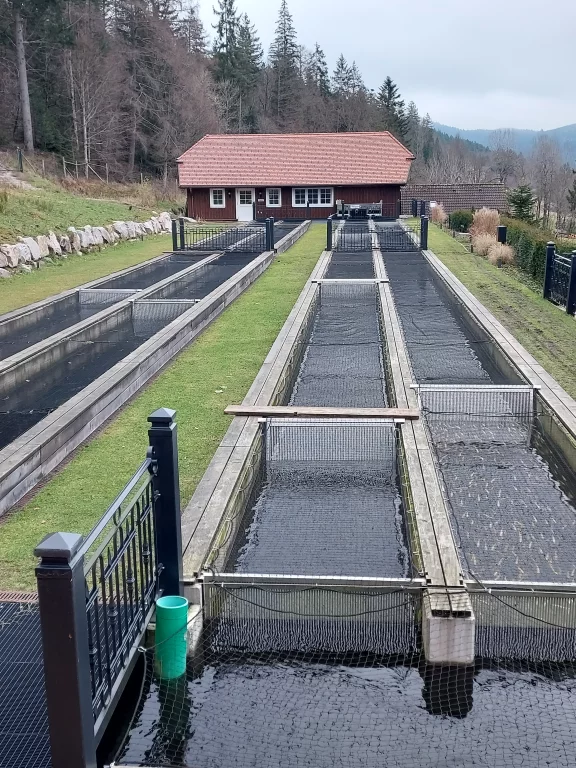
After several years of work, the Forellenhof is now one of the most modern fish farms in Europe. But don't expect to find some kind of futuristic factory! Golden trout swim peacefully in large, almost ordinary-looking ponds. Rainbow trout, salmon trout, and Arctic char also inhabit the pools and canals fed by fresh, clear spring water.
Technology is certainly present, but it remains discreet. Pumps and filters ensure water quality, while much of the work is still done manually. "Fish farming requires a lot of work," explains Benjamin Thom, one of the fish farmers. And when he begins to tell us about the fish's journey from egg to plate, I understand why.
From egg to fish… and back again
It all begins in the hatchery, where the eggs become tiny fish, protected from external influences. Here, there is no need for antibiotics or unnecessary energy inputs: the spring water naturally maintains a constant temperature.
After about six months, the young trout are moved to the current tanks, where they will grow for several months. They have more space than in conventional fish farms and receive high-quality organic feed. This intentionally slower growth contributes to the quality of the fish.
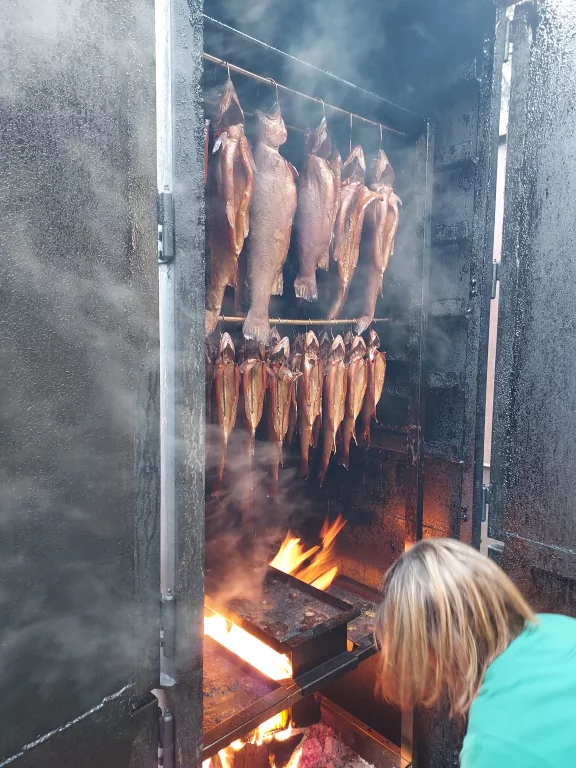
Approximately 60,000 fish destined for consumption leave the Forellenhof each year. A large portion goes to the restaurants of the Hotel Bareiss, while the rest is sold directly on-site at the Forellenhoflädle. Nearly a thousand fish are processed there every week.
The smoking process remains very traditional: whole fish are hot-smoked at around 90°C, while fillets are cold-smoked at around 20°C. And then there's the house specialty, the one that particularly caught my attention: golden trout caviar.
Caviar that doesn't kill the trout
This is probably one of the most astonishing stories of this visit.
Only female trout are involved. In the past, to collect the eggs, the fish had to be sacrificed. Here, the method is different. Benjamin Thom explains that it's enough to gently massage the trout's belly to collect the eggs. The fish can then return peacefully to its pond… and produce caviar again the following year.
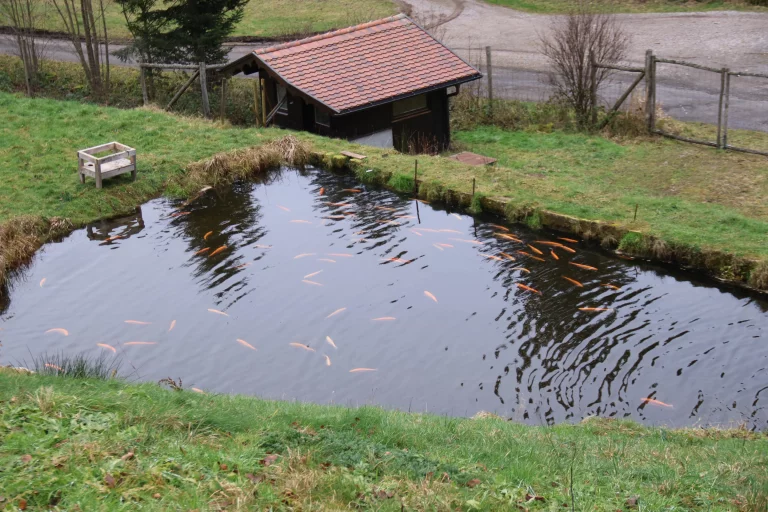
The eggs are then separated from their membranes, sifted, washed, filtered, salted, and then carefully sorted. This meticulous work undoubtedly explains why this little golden grain is so valuable. And naturally, after all these explanations, it becomes difficult to resist the urge to taste it!
The tiny grain that bursts in the mouth
At Forellenhoflädle, customers come to buy fresh fish, smoked trout, and chef-prepared specialties. But you can also sit down in the restaurant, in a warm atmosphere, to discover the farm's products.
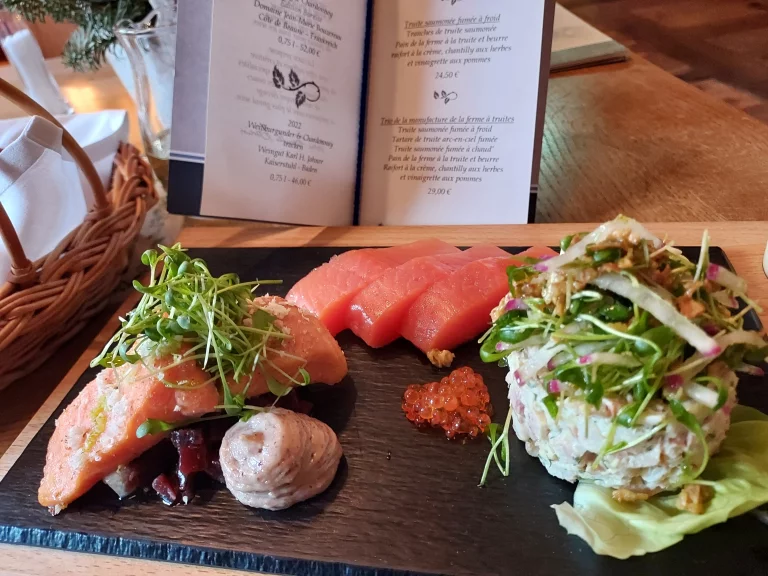
I absolutely loved the trio of house specialties: cold-smoked salmon trout, smoked rainbow trout tartare, and hot-smoked salmon trout. All served with Forellenhof bread, butter, herb cream, and apple vinaigrette. Simple in appearance, but delicious.
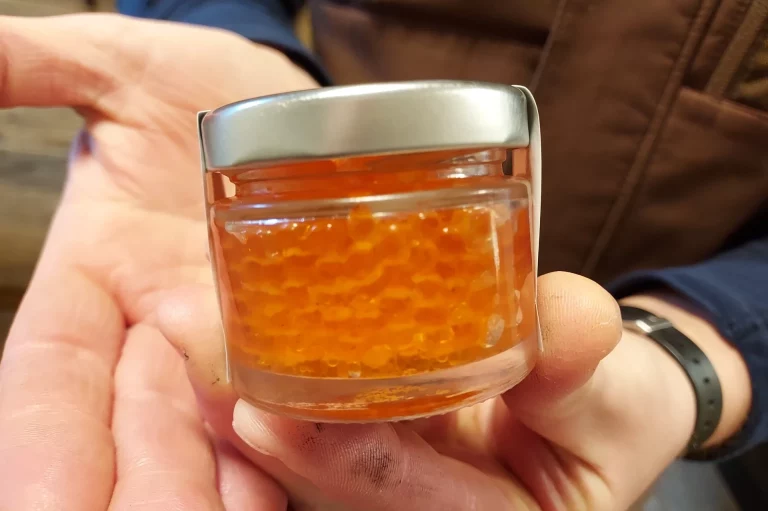
And then, of course, we had to go all the way with the discovery and taste this famous caviar: 50 grams of trout caviar served with bread from the Forellenhof and salted butter.
The verdict? A small golden grain that bursts delicately in the mouth, with surprising finesse. And above all, the added pleasure of knowing where it comes from, how it was produced, and that the trout that provided it is probably still swimming peacefully in its pond.
Ultimately, in the Black Forest, even the caviar has something profoundly natural about it.
Practical information
The Forellenhof is situated in a pristine natural setting, in the heart of the Buhlbach Nature Reserve in the Black Forest. The Bareiss family, owners of the eponymous hotel, purchased the former fish farm. After extensive renovations, the small inn, formerly known as the "Fischerstüble," has been transformed into a traditional Black Forest house.
The Forellenhof team offers fresh trout specialties and snacks in the restaurant dining rooms as well as on the large, sunny terrace. The trout shop ("Forellenlädle") offers freshly smoked trout and other delicacies to take away.
Forellenhof Buhlbach, Schliffkopfstraße 64, D-
72270 Baiersbronn-Buhlbach
Germany; such. +49 7442 47-0.Forellenlädle shop open Monday to Friday from 9am to 12pm.
INFO
www.bareiss.com